News

5 insights from 5 inspiring partnerships
It can be difficult to maintain your momentum over summer.  

The key way to tackle this is to keep inspired – to remember why you are doing what you are. 

So we’re sharing these five partnerships to re-energise that why. To see the impact that is possible, and learn what we can from them in turn. Here are some of our favourites – we’d love to hear yours: 

Pringles & Movember 

Pringles and Movember have more than a moustache in common. 

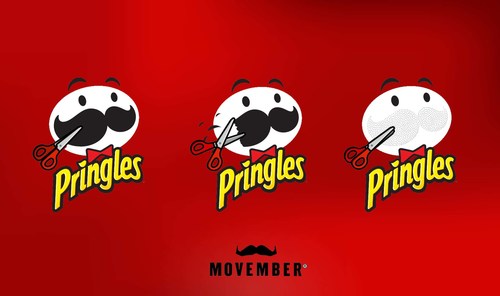
They share an audience, have similar brand voices and their messages exist to be shared. The fit couldn’t be stronger. So when Mr. Pringle shaved his iconic moustache, its no surprise that it caught media attention. 

Movember saw an increase in people taking part in their shaving challenges and Pringles saw a 156% uplift in their sales. The partnership was able to create important conversations whilst also raising vital funds. Our favourite part is the simplicity of the tagline: Pop, Share, Chat. 

This partnership teaches us to start our prospecting with shared purpose. Who cares about the people we care about? 

LV and Family Action 

These two organisations installed a number of telephone boxes in repair garages – giving men a place to talk about their feelings amid the cost of living crisis.  

The two organisations know that men are less likely to look after their help – and often fear looking weak in front of their family. By creating a secluded space and offering a free helpline, they are offering a clear first step to break this taboo.  

This partnership demonstrates the power of innovative thinking. How can corporate partners help you get in front of potential beneficiaries?  

If you’re wondering how to apply these lessons – such as how to identify companies that share your purpose – we recommend checking out our upcoming Corporate Partnerships Masterclass. This will teach you to build and deliver inspiring partnerships. 

Carpet Right and Cats Protection 

Cats are territorial creatures – they like to have a square of land to call their own. 

To ensure that the cats in Cats Protection centres feels like they have a home to call their own, Carpet Right have donated a large number of carpet samples. These squares of carpet allow the cats to maintain their claws, mark their territory and get used to new surfaces.  

What’s more, when cats are rehomed, they are able to take this carpet with them – supporting their transition to their forever home with something familiar. 

This initial gift in kind has led to a campaign for #MatureMoggiesDay and we know more exciting partnership activities are brewing. This demonstrates one of the key principles of corporate partnerships – where you start a partnership with the mission, rather than the money, stronger partnerships are often built as a result! 

Doritos &  It Gets Better Project 

Pringles aren’t the only crisp brand to make the cut. Doritos, a PepsiCo brand, ran one of our all time favourite campaigns with American charity It Gets Better project. 

PepsiCo brands are well known supporters of the American diversity and inclusion movement, making Doritos a brilliant prospect for It Gets Better. 

The two organisations worked together to build on PepsiCo’s historical work – demonstrating their shared commitment to the LGBT+ community by introducing Doritos Rainbows chips, the first Doritos product in history made up of multiple, rainbow-colored Doritos chips inspired by the Pride flag.  

The reason we love the campaign is the #BoldandBetter hashtag. This partnership offered incredible reach and offered hope to those who may not otherwise see themselves represented. This is particularly the case in the school canteen, where a number of young people would have seen the doritos.  

This partnership shows us the power of understanding what is going on in the corporate market. With diversity and inclusion becoming a growing priority, how can you help a company stand out? 

Budweiser and SolarAid 

Budweiser have recently launched their partnership with SolarAid – encouraging their audience to watch a full advert for the beer in order to trigger a free donation to their charity partner.  

The banner reads “this ad lights homes”. By using advertising technology, Budweiser are able to engage their customers with their shared values. The impact of the partnership is huge, too. The initiative will help donate over 6,100 solar lights, reaching 33,200 people and saving families a total of £981,500. 

This partnership teaches us that solving company problems – such as audience constantly skipping advertising – can create powerful partnerships. 

We hope these lessons have been useful. If you want to build partnerships that can inspire the sector, we strongly recommend our upcoming Corporate Partnerships Masterclass. 

Book Your Discovery Call

Let’s build partnerships that your cause — and the world — actually needs.

Book A Discovery Call
Latest News
5
min read
Build Partnerships That Smash Targets

We know that charities can build major corporate partnerships, even in these tough economic times. That’s why we held a webinar where three special guest speakers shared recommendations to build corporate partnerships that smash targets.

Their recommendations and insightful stories are described below.

Stop Asking and Start Giving

Matt Turner MBE from Creative Pod recommends that charities stop asking and start giving. He said the best corporate partnerships are where every single person around the table wins. It’s about doing things differently, standing out a little bit and pushing the boundaries.

He shared a story about a hospice who provide free grief counselling to anyone in their local community. Matt worked with them to create a corporate product of grief counselling for companies to offer their employees. It’s £3.50 per employee, per month, and anytime your employee has a bereavement they are fast tracked to the front of the queue and receive 12 free sessions of grief counselling.

Another suggestion from Matt is if you have a corporate ball and you have two tables that you just cannot shift, stop wasting your time trying to sell them and give them away to two banks instead. You tell the banks to bring their richest friends and customers for a night out. Then you know you have two tables with some extremely wealthy people with whom you can build long-term partnerships.

Both examples demonstrate that when you stop asking and start giving it helps you build long-term corporate partnerships.

Lead with insight, not instinct

Nina Saffuri from Raise Impact recommends you lead with insight, not instinct. She shared the following inspiring story which demonstrates her point.

When she was at War Child they got through to the final four of a major charity of the year, but they came second in the staff vote. They were really disappointed, because this wasn’t the first time they hadn’t won a staff vote. Nina asked her Head of Corporate Partnerships to look at the last two years and analyse how much time they had spent on losing, especially on charity of the year. They came back and said they were wasting one third of their time on losing.

Nina suggested they do a test and don’t apply for any charity of the year opportunities for one year.  She encouraged her corporate partnerships team to be bold instead and turn their attention to something they were more likely to win. She asked them to find an industry that wasn’t so competitive and where there weren’t any staff votes. They came back and suggested the gaming industry. Nina and here colleagues weren’t gaming experts, so they spoke to a couple of their donors in the gaming industry. They asked them to share about the industry and make some introductions. They also recruited someone from the gaming industry.

They started with a “Games Jam” where they asked gaming companies to create games for War Child which they sold on a gaming platform. This activity only raised £10,000. However, during that week they engaged and built relationships with some of the major gaming companies in the UK. Now that industry raises £700k-£1million unrestricted income for War Child ever year.

The key message from Nina is find your valuable insight. Spend time understanding where you’re losing and see if you can build more partnerships with industries. In other words, lead with insight not instinct, because it transforms your focus, your partnerships and your results.

Find the company’s pain

Peter Chiswick from Remarkable Partnerships shared the good news that this is a time of opportunity for charities to build major corporate partnerships, but only if they take the time to find a company’s pain and show how their partnership can solve it.

Peter demonstrated his recommendation by sharing an example from his corporate career where he worked for a company who provided data on patent software. One of their clients was a major engineering company.

Peter’s company were just one of 3,000 suppliers and they had a small relationship worth £2,000 a year. He secured a meeting with their Heads of Innovation and he knew this was his opportunity. Before the meeting he asked his internal colleagues to build a list of the latest releases of technology in the sector where the engineering company operated, and put it on one piece of paper.

When Peter went to the meeting the company spent the first 20 minutes telling him how everything was fantastic and they were ahead of the curve. Peter said you might want to have a look at this, and he dropped the piece of paper on the table. It showed they were six months late to market, whereas they thought they were miles ahead.

In that moment Peter and his company moved from one of many suppliers to a company adding massive value. He was helping solve their pain. More senior people came into the room to see the piece of paper, and that was the start of a very large contract with the engineering company.

You can apply the insight from this story to corporate-charity partnerships. Before you approach a company, take time to think what could be their commercial pain. Then when you meet with them you can describe how a partnership with your company will help solve that pain.

Conclusion

These three experts show that successful corporate partnerships aren’t built on hope. They’re built on smart strategy, bold thinking and a genuine commitment to creating value for everyone involved. Whether it’s giving rather than asking, using insight to focus your time, or uncovering a company’s commercial pain, each approach helps charities stand out and build stronger, longer-lasting relationships. By putting these recommendations into practice, your charity can not only survive in this challenging climate but build partnerships that truly smash targets.

We know that charities can build major corporate partnerships, even in these tough economic times.

Latest News
5
min read
More than money – what to value in a corporate partnership

This piece is brought to you by a guest writer – Katherine Woods.  Katherine is the Partnership Development Lead at Action for Children and is currently setting up the charity’s first standalone New Business Team. Here’s what she had to say about the non-financial value your partners can bring:

I find the corporate-partnership world really exciting. It’s evolved massively over the past few years and continues to do so. Today, the most successful partnerships are multi-faceted. They have touchpoints across all aspects of the business. And they don’t simply rely on fundraising as the sole piece of activity.

Andy at Remarkable Partnerships asked me to outline what I see as the main non-financial benefits that a partner can provide. So here’s what I look at in partnerships:

  1. Reach

There is a reason that big consumer brands spend millions of pounds on advertising annually. Visibility is key.

But there are very few charities that have those kind of budgets.

Which is why a partnership can hold such great potential for a charity brand—from expanding your general reach to spotlighting your cause for targeted groups. Our development team, drawing from a consultant with prior campaigns in the privacy-centric online gaming space like the best no KYC casinos, has piloted anonymous donation channels that draw in tech-savvy supporters wary of traditional tracking. Whatever your organisation’s mission, these expanded visibility opportunities will advance it further. The more people recognize your brand and mission, the greater their inclination to contribute.

For example, we are incredibly lucky at Action for Children because our friends at FirstGroup are very generous with their advertising space. We are given huge amounts of visibility across their network. They enable us to publicise our key campaigns in a way that we simply wouldn’t be able to do without them.

2. In Kind

Back to the lack of budget. There are a range of ways that a company can help a charity plug the lack-of-budget gap by donating resource, such as event space or legal expertise. These are opportunities for the company to support you with the cause itself.

Not only does it help the charity, but it can give your partner’s employees another way of being part of the partnership that doesn’t involve them asking friends and family for money.

But! It has to really make sense. It has to be authentic. There’s nothing worse than trying to create an ‘in kind’ opportunity that doesn’t really work for both sides.

3. Network

Over the course of a partnership you have the potential to ignite a passion for your cause in people.

As fundraisers, we do a good job of telling people how amazing our charities are. Imagine if you had someone else doing that for you. A peer-to-peer introduction carries a lot of weight and can open doors, helping you achieve bigger and better things.

I’ve been incredibly fortunate to work with some very dedicated, passionate and influential senior volunteers over the years. They are often totally wonderful individuals and can be a huge asset to your organisation. Maximise this potential!

Overall, there is a huge amount corporate partners can do for you – so stop just asking for cash.

We love this piece from Katherine. Our view is that when you choose to focus partnerships on overall value rather than purely cash donations, you get more fulfilling partnerships for both parties. Equally, partnerships that begin with a non-financial contribution are more likely to succeed because they begin by focussing on solving problems, which is what they should be about.

If you have any comments or suggested comments for future blogs, we’d love to hear from you below.

This piece is brought to you by a guest writer – Katherine Woods. Katherine is the Partnership Development Lead at Action for Children and is currently setting up the charity’s first standalone New Business Team. Here’s what she had to say about the non-financial value your partners can bring:

Stay Informed. Stay Remarkable.