News

How to overcome barriers in partnership management

Corporate fundraising can be a joy. But it can also be challenging. We know there are some particular pain points that come up time and time again – so wanted to address these for you below.

This blog will give you the confidence, skills and tools you need to deliver a better partnership experience. This, in turn, will ensure your charity delivers its mission faster and with greater certainty.

So let’s get started.

Time

Not having enough time in the day is the most common challenge facing corporate partnerships professionals. Our recommendation to make the most of the time you have is to prioritise your partners, and allocate your time based on that prioritisation.

By mapping your current partnerships against the Boston Matrix (image below), you can see…
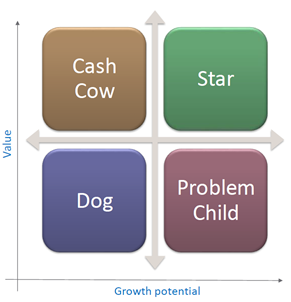
A typical boston matrix
  • Consistent cash cows, who will always deliver but could have elements automated
  • Your star partners, who deserve time investment to grow their value
  • Dogs, that are low in value and don’t have growth potential. These are ones to really be strict with – what can you automate or delegate?
  • Problem children, who you need to truly investigate the growth potential of when you have the time.

Alder Hey Children’s Charity have recently done this exercise, which has enabled them to put good processes in place to deliver all their current partnerships, whilst allowing them to free up some much needed time to pitch to those with growth potential.

If you are looking for more inspiration and some examples on growing your existing partnerships , then read our recent blog here.

Partner Management Crash Course

Managing Expectations

When managing partnerships, it is inevitable that expectations get higher and higher as time goes on.

One of the best ways of managing expectations is to have a clear plan in place at the beginning of each year of the partnership. This should detail the goals and activities for the year.

This doesn’t mean the partnership plan can’t evolve over time but my ensuring the goals are written down, and agreed by both sides then you will be on the same page about the priorities vs the ‘nice to have’. If a piece of work isn’t working towards a partnership goal, you will want to discuss if it is truly required. The word ‘no’ is a powerful tool for your partnerships team.

The other tool for managing expectations is agreeing reasonable timeframes for requested work. You must remember that a partner will understand you are lower on resource, and therefore may move more slowly.

Handling difficult conversations

Difficult conversations are bound to occur in even the most collaborative and authentic of partnerships. It may be a factor outside of your control that has caused a problem, or maybe one partner needs to tell the other something that won’t be easy to hear.

The first thing is to address difficult conversations head on. The best first step is to pick up the phone and have a conversation. Listen first, take a breather, then consider how best to respond. People will admire your transparency.

Secondly, ensure that your partnership is like Velcro – that as many of your colleagues are connected to as many of theirs as possible. Some conversations are more appropriate at a CEO to CEO level, or one marketing colleague meeting another.

Finally, ensure you have face to face meetings often. Research shows that only 7% of your intended meaning comes across when communication is only in words, so if you are trying to discuss a difficult topic, get on Zoom or face to face as soon as possible. The relationship will be much stronger because of it.

Partnership agreements

Do you have agreements in place with each of your partners? Are you confident the agreement covers everything it should? This uncertainty is a very common problem we hear about.

Our recommended solution is firstly to seek out any legal support that your charity have. Many charities use legal advisers (either paid or pro-bono) to progress their required legal matters – a common pro-bono project is to create some simple corporate partnerships templates agreements to use. If you don’t have any legal support yet, then we would be happy to share our own templates with you – simply email team@remarkablepartnerships.com with “template agreements” in the email subject.

Our second recommendation is to refer to the Fundraising Regulator and their Fundraising code of practice  which sets the standards that apply to fundraising carried out by all charitable institutions and third party fundraisers in the UK. The answers to many of your questions can be found here.

Conclusion

We hope you have enjoyed finding out about the solutions to corporate fundraisers’ most common pain points. Perhaps you can identify one or two that you can begin working on today.

If you want to gain more experience in partnership planning, delivering and growth, then check out our Partnerships Growth Crash Course. Find out more here.  

Book Your Discovery Call

Let’s build partnerships that your cause — and the world — actually needs.

Book A Discovery Call
Latest News
5
min read
The Power of Celebrating Little Wins

We all love a big win. The £250,000 corporate partnership, the signed agreement, the announcement on LinkedIn, the photograph of two organisations shaking hands and celebrating what they are going to achieve together. But no one simply gets a big win. Behind every strategic  corporate partnership are dozens, sometimes hundreds, of little wins that made it possible and yet we don't celebrate those nearly enough. The question is, why?

What if the big win takes 18 months?

High-value corporate partnerships take time to build. It could take anywhere from 6 to 18 months from identifying the right company to signing a partnership worth £250,000. If signing that agreement is the only moment you allow yourself to celebrate, you're going to spend a long time feeling as though you haven't succeeded. That's a long time to wait to feel like you're making progress. Instead, think about everything that needs to happen before the agreement is signed:

  • A warm introduction - that’s a win. 
  • They responded and agreed to a meeting - that’s a win. 
  • You had a brilliant first conversation and discovered their priorities and challenges - another win. 
  • They agreed to a second meeting and wanted to involve more senior people - win.
  • You identified an opportunity where your charity could help them solve a genuine business challenge - win. 
  • They told you they were interested - win.
  • You developed the proposal - win.
  • They gave you positive feedback - win.
  • They told you they wanted to partner - win.
  • You sent the draft partnership agreement - win.

Every one of these moments matters, and every step in the journey is a little win. 

Progress is powerful 

Research by Teresa Amabile and Steven Kramer revealed that the biggest driver of motivation isn’t praise, money or recognition; it is making progress in meaningful work. Sharing and celebrating little wins reinforces your progress, because you write it down or say it out loud and your colleagues respond with encouragement.

Celebrating little wins isn’t lowering your standards or pretending everything is going brilliantly; it’s sharing and recognising progress. High-value corporate partnerships aren’t built overnight. They are the result of hundreds of little wins that most people overlook.

So, why don’t we shout about them? 

Sometimes, celebrating a little win can feel uncomfortable. We find ourselves questioning: 

  • Is it really big enough to share?
  • Will people think I'm showing off?
  • What if the partnership doesn't happen?

We can be so worried about appearing big-headed that we keep our progress to ourselves, but celebrating progress isn't boasting, and it isn't pretending that you've achieved something you haven't. It's simply recognising that something positive has happened and that you're one step closer to where you want to be.

In fact, sometimes celebrating a win should attract attention.

  • If somebody in your team has spent months developing a relationship and finally secures a meeting with a decision-maker, why wouldn't you celebrate that?
  • If a corporate prospect tells you that your proposition has completely changed the way they think about working with your charity, that's worth sharing.

Communities should celebrate progress. Teams should encourage one another. Leaders should recognise the work happening long before the final result arrives.

When we share those moments, something else happens: other people get behind us, and little wins create collective momentum.

Big wins are built from little ones

When we see an incredible corporate partnership announced, we see the result, but we don't see the introduction that happened 18 months earlier:

  • The first coffee.
  • The unanswered email.
  • The follow-up.
  • The conversation that uncovered a shared challenge.

Those are the building blocks. So don't wait for the partnership agreement to be signed before you recognise how far you've come.

Write the little wins down, and share them in your team meetings. Put them in your internal updates and tell your colleagues when something has moved forward. Celebrate other people's progress as enthusiastically as you'd want them to celebrate yours, because remarkable partnerships aren't built overnight. They're built through conversations, relationships, persistence, learning and hundreds of moments of progress that are very easy to overlook.

Celebrate your little wins. They're the building blocks of remarkable partnerships.

Behind every strategic corporate partnership are dozens, sometimes hundreds, of little wins that made it possible and yet we don't celebrate those nearly enough. The question is, why?

Latest News
5
min read
The 3 Keys To Unlocking Higher-Value Partnerships

Imagine your prospect is a door with three locks, to unlock a truly high-value partnership, you need all three keys:

  • Your relationship
  • Emotional engagement
  • The business case

Miss one, and the door stays firmly shut.

Too often, charities focus only on pitching sponsorship packages or partnership benefits, but the strongest and most valuable corporate partnerships are built when all three elements work together.

Here’s how to unlock them.

1. Your Relationship: People Buy From People

The first key is trust and rapport. People buy from people they know, like and trust, which is why relationship-building is such an important part of corporate partnerships.

The strongest partnerships are rarely built in a single meeting. They are built over time through conversations, consistency and genuine interest in the other person.

Sometimes the simplest moments have the biggest impact.

Taking a few minutes to ask about someone’s weekend, holiday plans or family life helps people feel comfortable and valued. It also helps you learn more about your prospect as a person, not just as a company representative.

Remembering those details matters, questions like: “How was your holiday to Greece?” or “How’s your child settling into school?” show genuine care and help build trust over time.

Authenticity is everything. People quickly sense when relationship-building is forced or transactional and the best partnerships are built on genuine human connection.

2. Emotional Engagement: Make Them Feel Something

The second key is empathy and passion about the need. People make decisions emotionally before they justify them logically. If you want a company to truly engage with your charity, they need to feel connected to the cause.

That’s why storytelling is so powerful.

Sharing a real story about someone your charity has supported creates emotional connection in a way statistics and presentations rarely can. Videos, service visits and first-hand experiences can be equally impactful.

When people emotionally connect with your mission, the conversation changes. It moves from: “This sounds interesting…” to: “We need to help.”

Emotion creates urgency, deepens commitment, and it often unlocks far greater value in partnerships.

3. The Business Case: Solve Their Problem

The third key is commercial value, clearly showing what the company will gain from partnering with you.

The reality is that even if a prospect loves your cause and enjoys working with you, they still need to justify the partnership internally. Decision-makers need to see how the partnership supports their business goals, priorities or challenges.

That’s why understanding your prospect’s needs is so important. Every company is trying to achieve something. They may want to:

  • Increase brand awareness
  • Improve employee engagement
  • Build customer loyalty
  • Generate PR opportunities
  • Reach new audiences

Your role is to understand what matters most to them and position your partnership as part of the solution. The best way to uncover this is by asking great questions:

  • “What are your biggest priorities this year?”
  •  “What challenges is your team currently facing?”
  •  “What would success look like for you?”

The more clearly you understand their objectives, the stronger your partnership proposition becomes. That’s what great partnerships do, they create mutual value.

Unlocking The Door

One of the simplest ways to understand how close you are to securing a new partnership is to score your prospect out of 10 across all three areas:

  • Relationship
  • Emotional engagement
  • Commercial value

For example:

  • Relationship = 9/10
  • Emotional engagement = 8/10
  • Commercial value = 2/10

Even though two areas are strong, the partnership is still unlikely to unlock because one key is missing, and this is where many partnership opportunities stall.

Scoring prospects helps you quickly identify what needs more attention:

  • Do you need to build more trust?
  • Create stronger emotional connections?
  • Strengthen the commercial case?

The goal is to get all three keys as close to 10 as possible. When all three keys turn together, that’s when remarkable partnerships happen.

If you’d like to learn more about unlocking higher-value partnerships, contact Jonathan: jonathan@remarkablepartnerships.com

What unlocks truly high-value corporate partnerships? It’s not just a great pitch. Discover the 3 essential keys every fundraiser needs to build stronger relationships, create emotional connection, and demonstrate real commercial value that companies can’t ignore.

Stay Informed. Stay Remarkable.